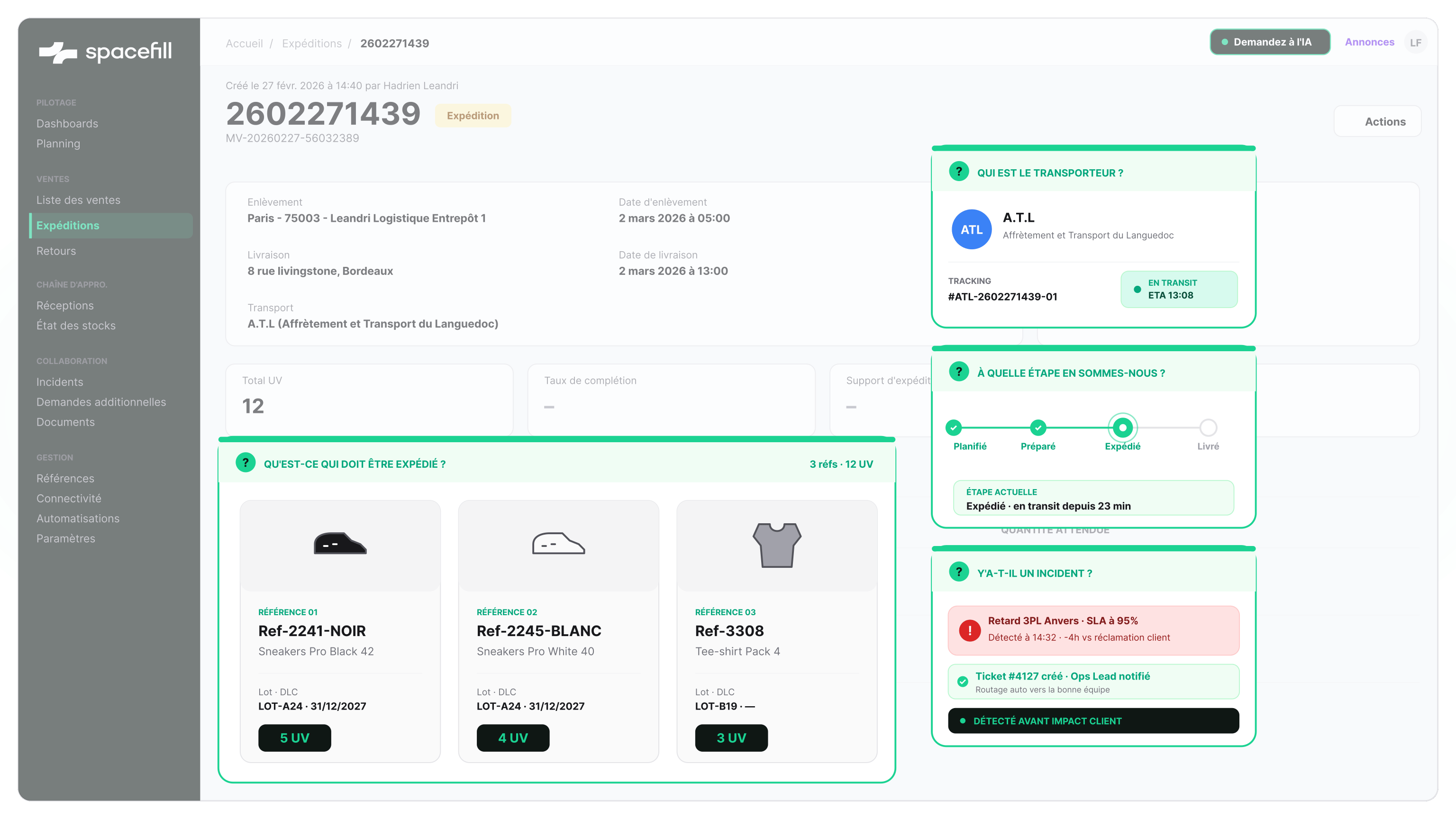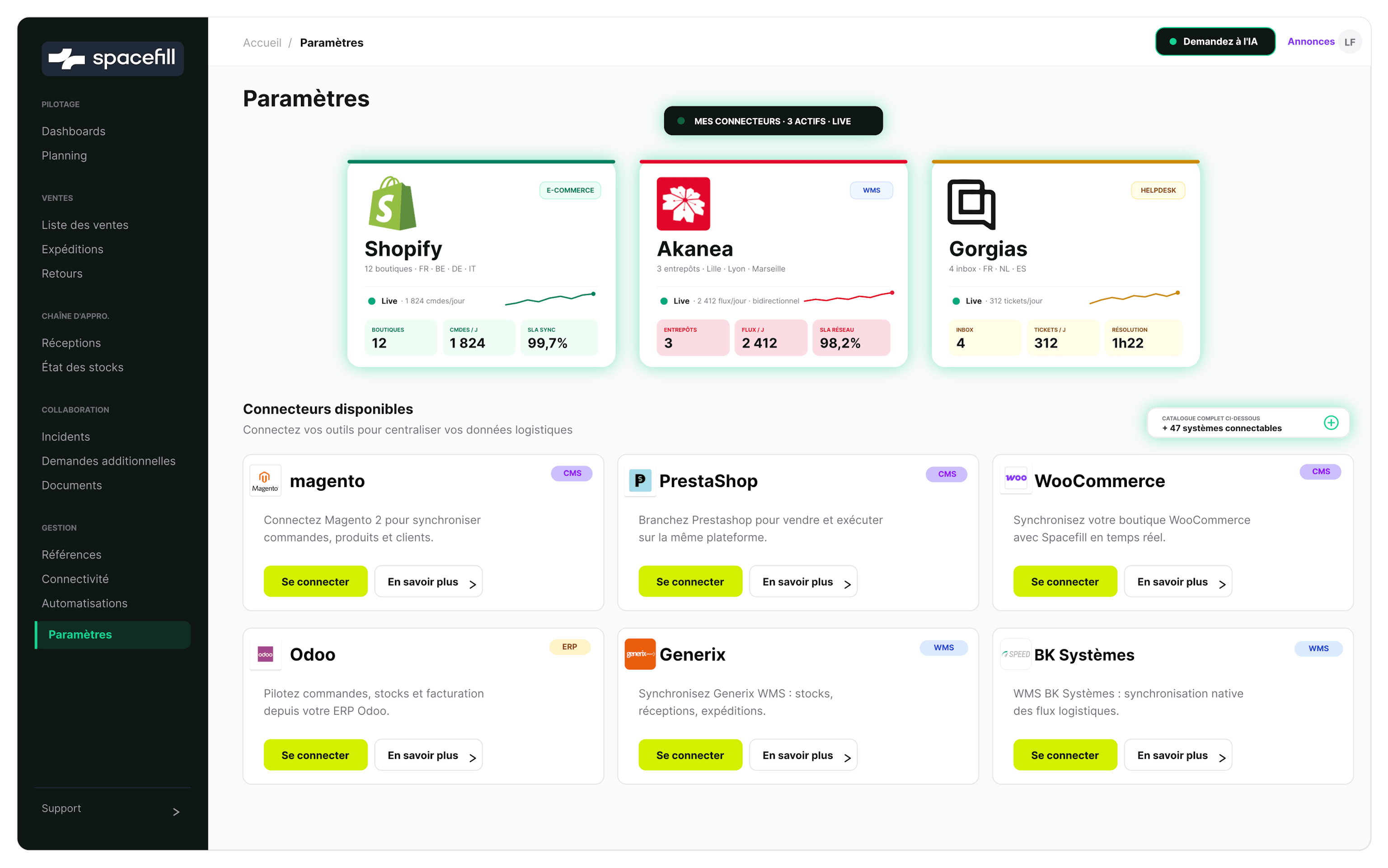

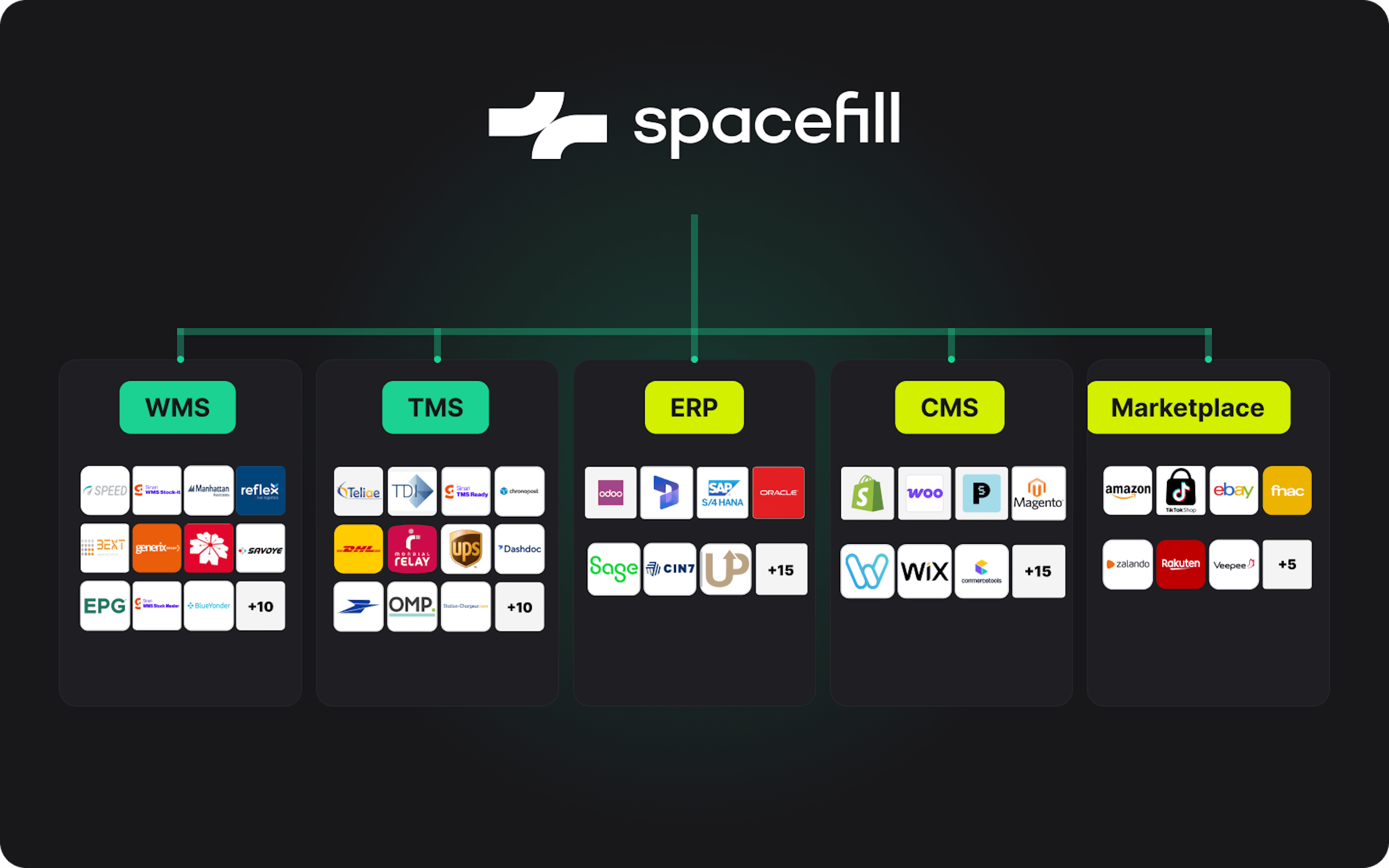
50+ WMS natively connected. Compatible with 100% of WMS on the market via API or EDI. Integration in under 30 days on average.

Discover the OMS
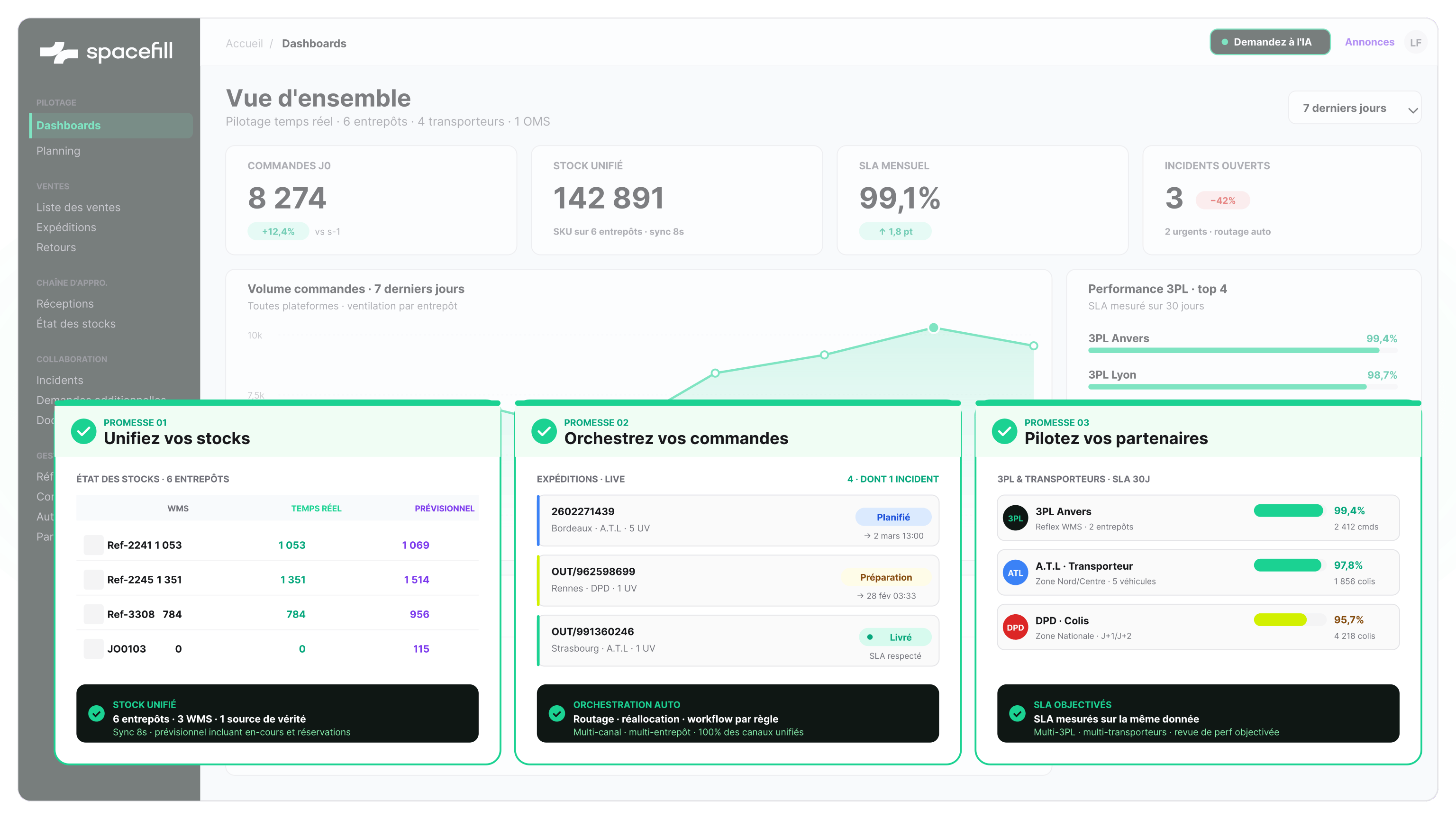
Orchestrate every order from capture to routing, across channels and sites.
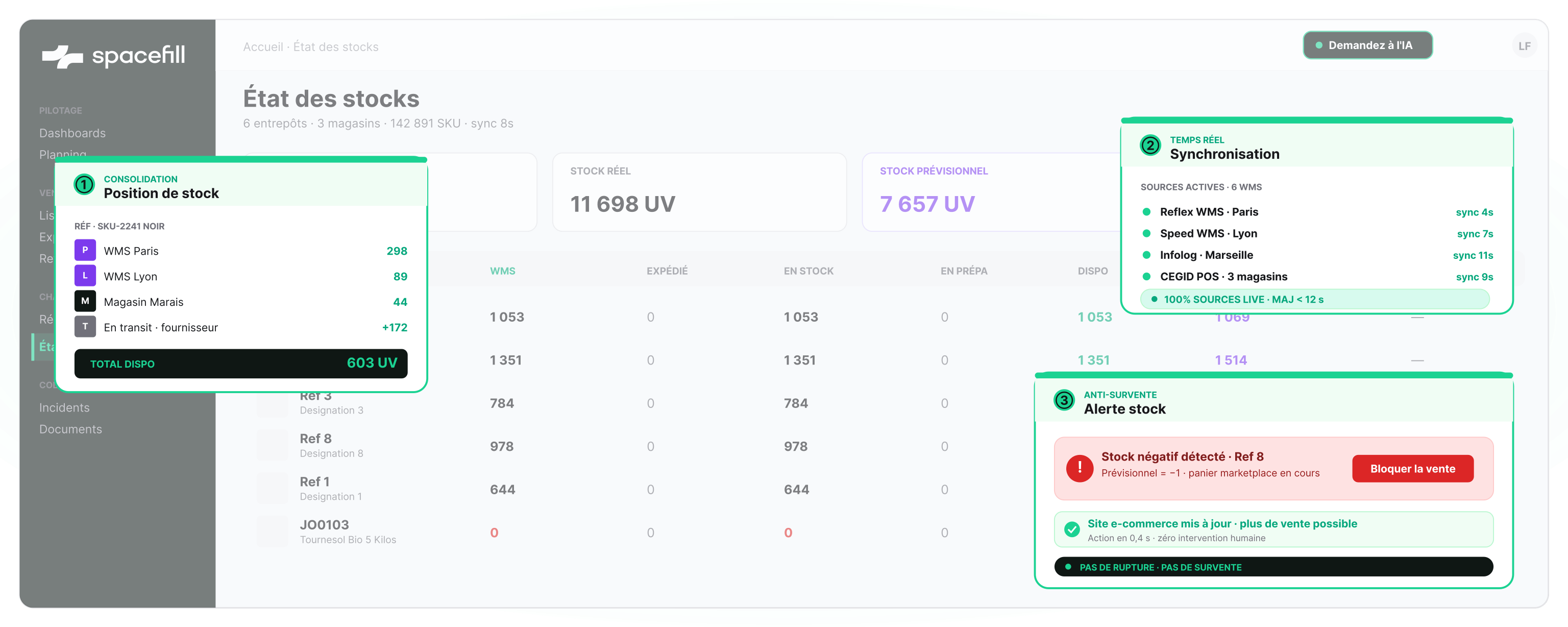
Discover the IMS
Unify your inventory (warehouses, stores, transit, suppliers) into one real-time view.

Discover our Shipping Management
Track every parcel from picking to delivery, across all carriers.

3PL Management
Manage your logistics providers on the same data they see, in real time.

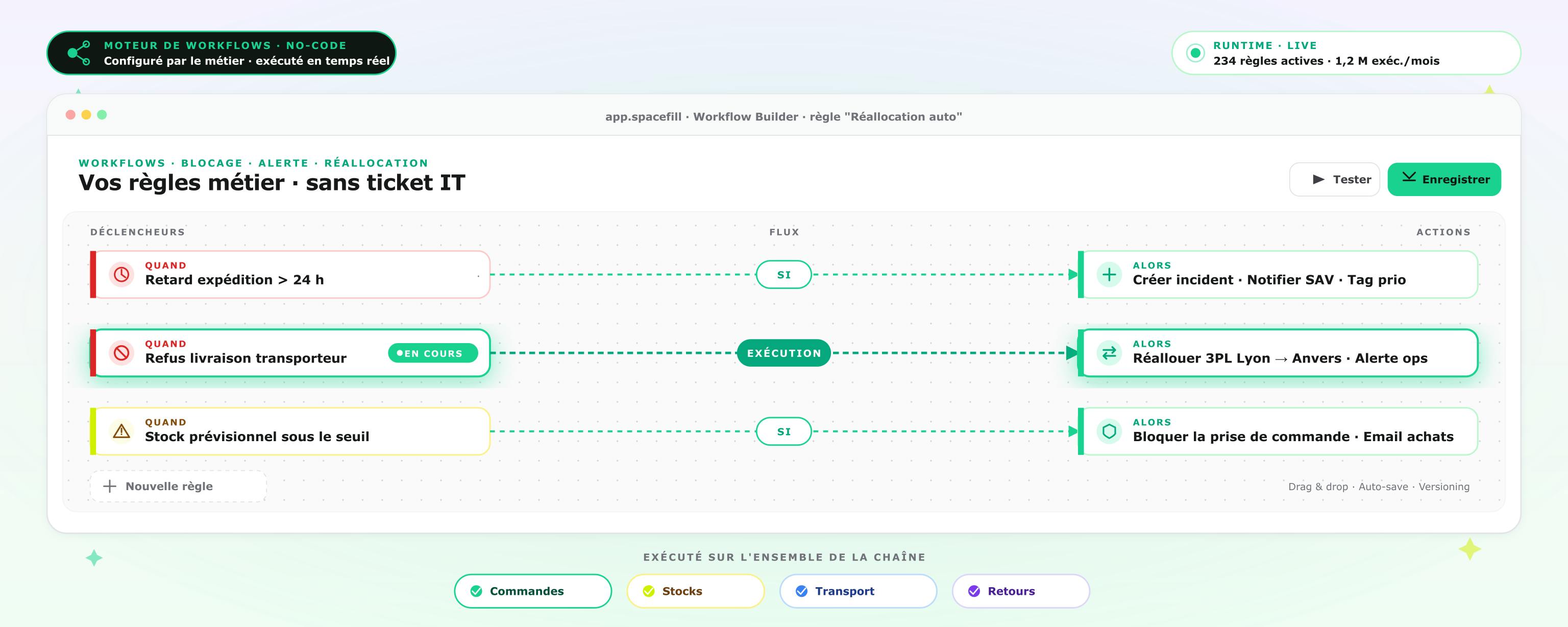
Discover our Workflows & Rules Engine
Automate your business rules with no IT ticket: trigger, condition, action.

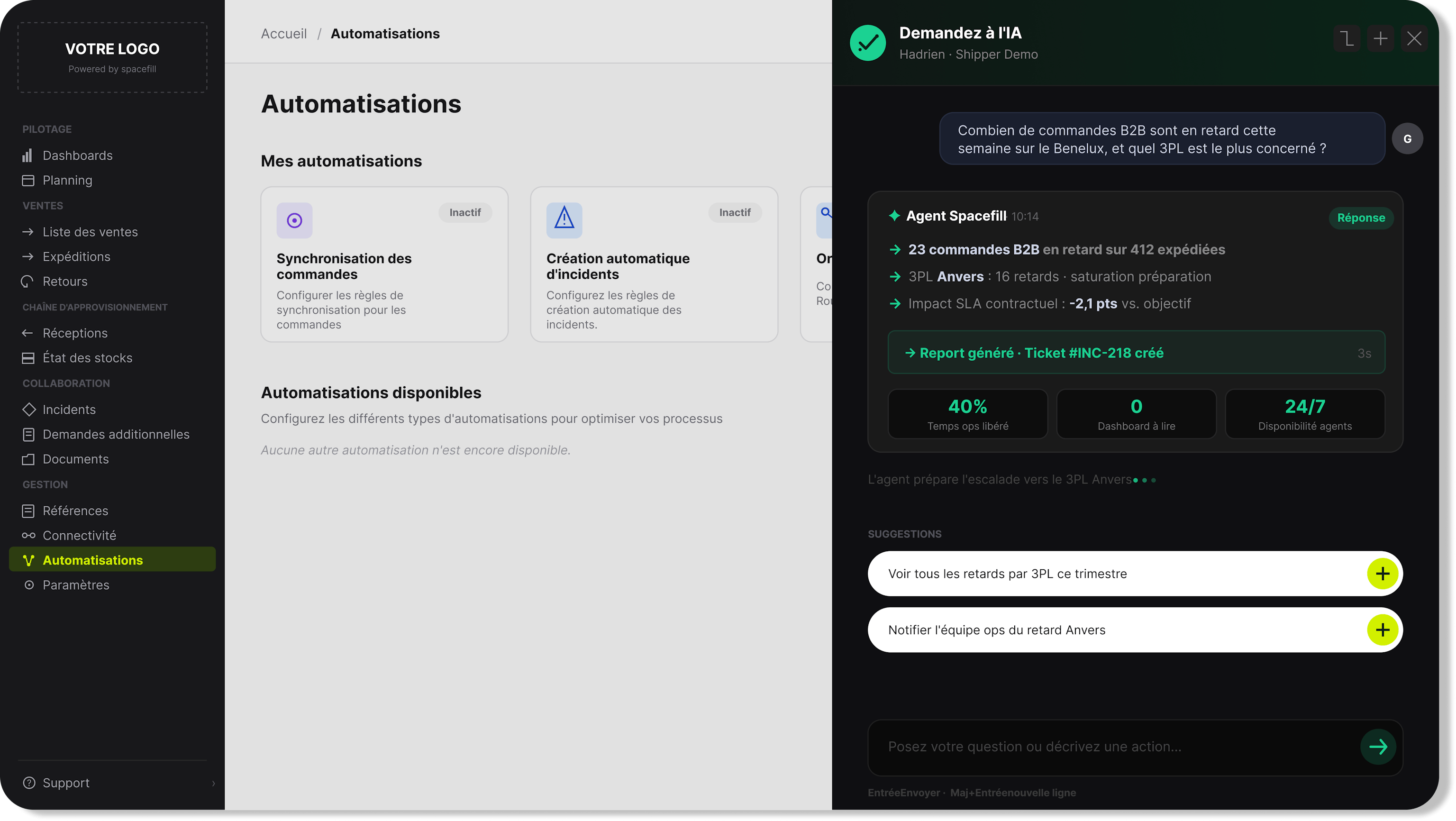
Discover our AI agents
Four AI agents connected to your OMS: assistant, detection, data entry, routing.

Discover our Middleware
50+ native connectors and a REST API to plug in your entire ecosystem.
Stand out in RFPs
Walk into 3PL RFPs with a white-label customer portal.
Simpler, more reliable connectivity with my customers
Simpler, more reliable connectivity with my customers and brands.

Give my customers full transparency
Your customers act on orders, incidents and inventory on their own.
Boost productivity on administrative tasks
Double the volume your admin team handles.
Order Management System
The OMS that digitizes your supply chain end to end, from 100K to 10M orders a year.

IMS
Centralize, manage and automate your inventory operations
3PL Control Tower
Outsource logistics without losing control of execution at each 3PL.
WMS Middleware
Connect any WMS and push logistics data out to your entire IT landscape.
Deliver on the customer promise (ATP/ATS)
Show an exact date from the product page, and hold to it.
Manage the supply chain end to end
Aggregate your WMS, TMS, 3PLs and carriers in real time on a single platform.
Orchestrate multi-site flows and inventory
Orchestrate inventory and orders across multiple warehouses and stores.
Manage my logistics providers end to end
A control tower over your 3PLs and carriers, with no IT project.
Connect your entire logistics IT landscape,
with intelligence on top
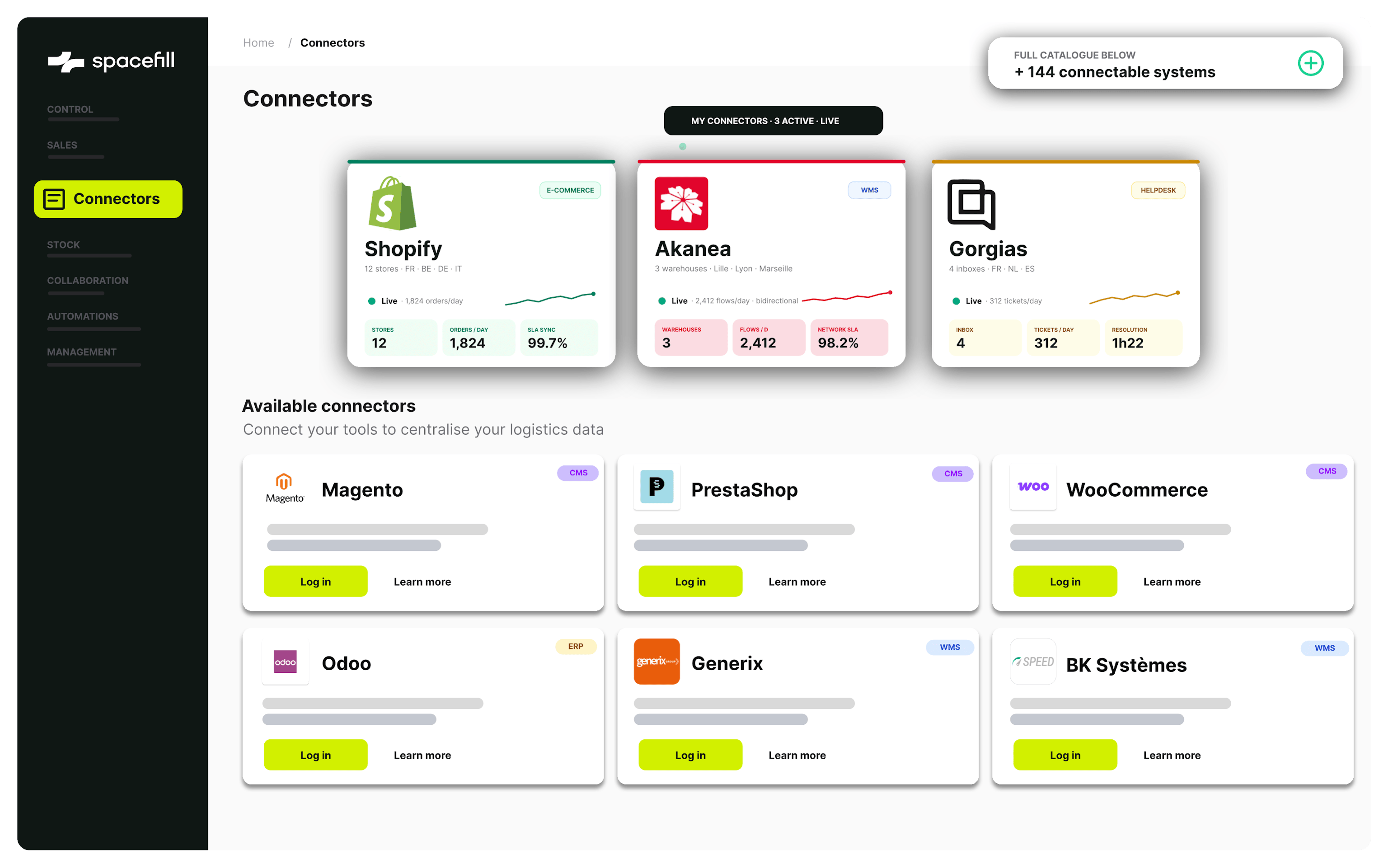
Pre-built connectors to your ERPs, CMS, marketplaces, B2B portals, POS, WMS, TMS, CRM, accounting systems and messaging tools.
At the centre, an intelligence layer that supervises every exchange, blocks failing flows, triggers alerts and redistributes the data.

+%
01234567890123456789
additional sales from plugging in one more channel
x
01234567890123456789
faster to deploy than a traditional OMS
-%
01234567890123456789
01234567890123456789
of custom development avoided thanks to pre-built connectors
-%
01234567890123456789
01234567890123456789
failing flows detected by the customer before the supplier
01234567890123456789
custom development required to add a 3PL, a channel or a country
The problem
Every new system you add is a multi-month IT project, with no guarantee it will hold

Every new connection starts from scratch
Adding a WMS, opening a marketplace, plugging in an ERP: each project ties up your IT department, an external integrator and several months of development. Commercial decisions (a new channel, a new 3PL, a new country) turn into an IT roadmap instead of quick deliverables.

Flows fail silently. The customer reports the incident.
A webhook that fails, a malformed EDI file, an order that vanishes between two systems: with no monitoring, the supply chain team finds out through a customer complaint or from the 3PL. The delay between the error and its detection costs more than the error itself.
Logistics data stays trapped in the WMS
Support can't see the order status in the CRM. Finance doesn't know when to invoice. BI gets the data 24 hours late. Every team asks for an extract, and every extract is a second source of truth that diverges at the first bug.
The vendor hands you API docs. You're on your own.
Most OMS vendors ship software and API documentation. Integrating your WMS, your ERPs and your marketplaces is on you. The hidden project costs: consulting, integrator, ongoing maintenance. And every update to one of those systems can potentially break the whole thing.
What changes
Five real situations. The same plumbing.
Cases IT and supply chain leaders recognize instantly.

A new WMS means a 3 to 6 month project
Connecting a new 3PL's WMS means a 3 to 6 month IT project. IT is stuck on the integration before you can even onboard a new provider.

50+ WMS natively connected
The WMS connector is among the 50+ natively integrated systems. Spacefill teams run the integration. Live in a few weeks.
Silent marketplace flow
A marketplace order fails to sync with the WMS. Nobody knows. The customer opens a support ticket 72 hours later.
Detection in seconds + replay
The failing flow is detected within a second. Blocked, Slack and in-app alert, message corrected then replayed with no manual restart of the source system.
Support with no WMS access
Support calls logistics for every customer request: the status isn't in the CRM, it's in the WMS support can't access.
Zendesk/Gorgias native
Zendesk and Gorgias are native connectors. Support sees the full order status in their own tool, without calling anyone.
Architecture
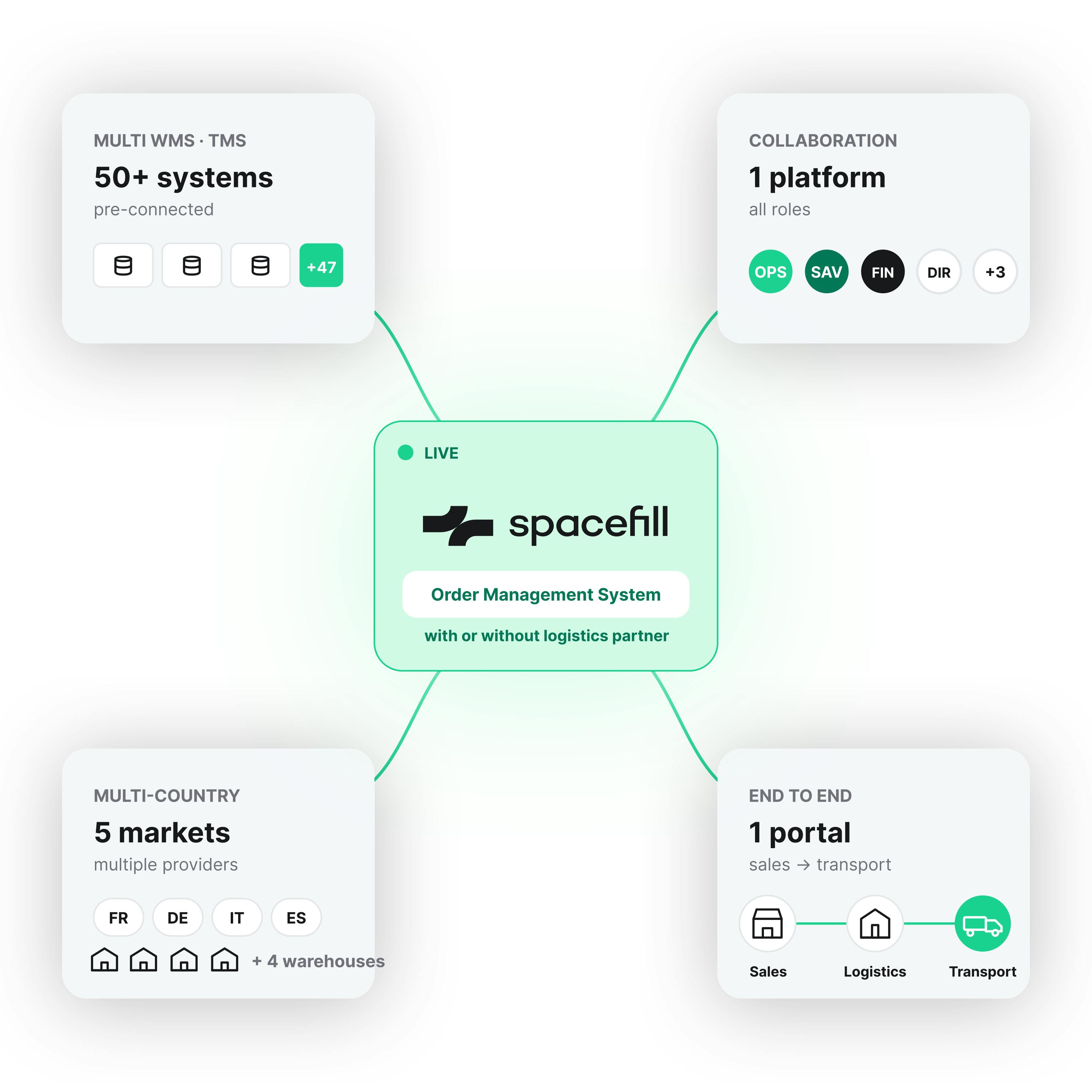
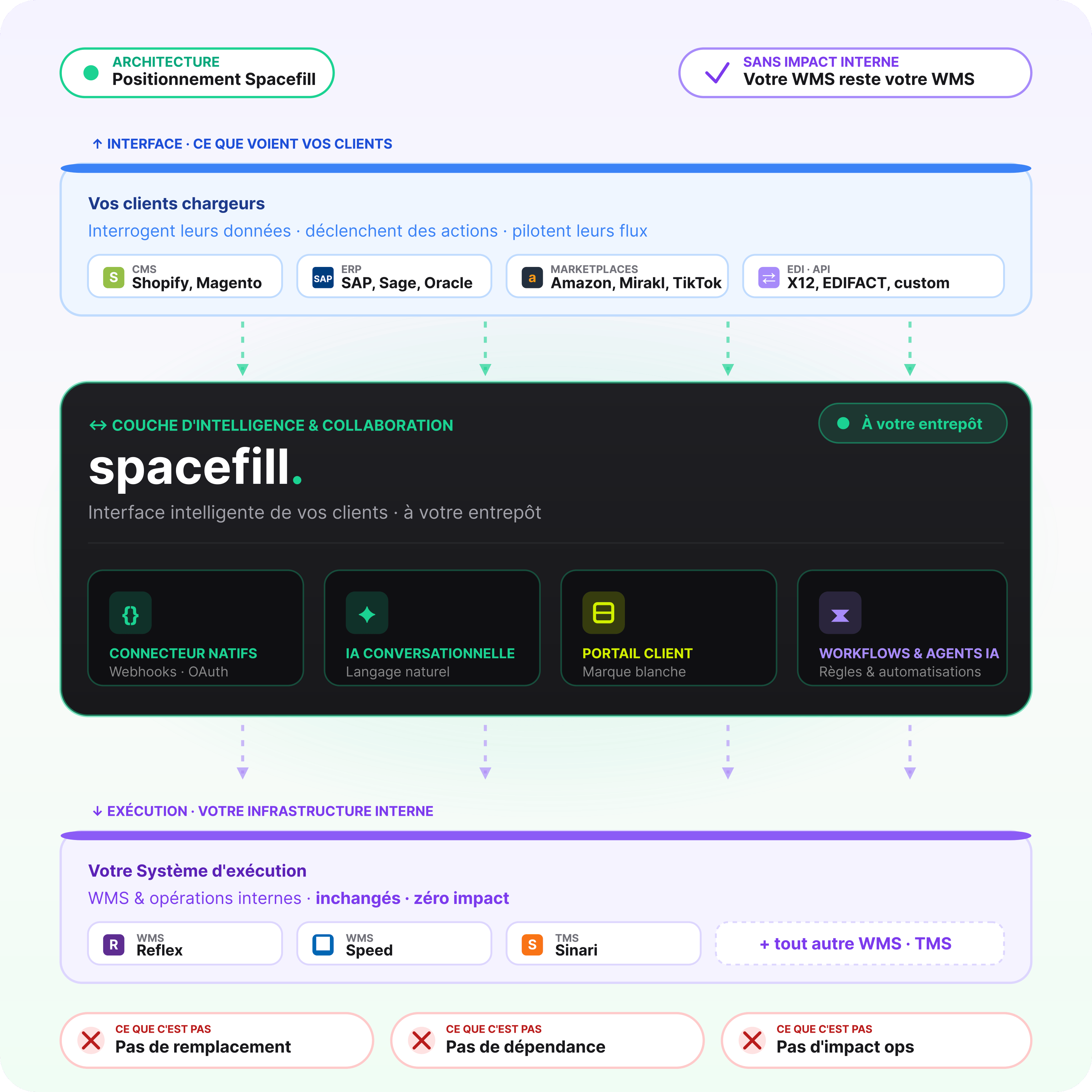
An intelligence layer between your sales systems and your execution systems
Spacefill sits between the systems that capture orders and the systems that fulfil them. At the centre, the orchestration layer applies your rules, monitors every flow and redistributes the data to all your business tools.
- Upstream sources: ERP, supplier portal, data warehouse
- Order sources: e-commerce CMS, marketplaces, B2B & POS
- Execution: 3PL & WMS (50+), carriers & TMS
- Downstream redistribution: support CRM, accounting, messaging
How it works
From order capture to data redistribution
Four steps. No custom development on standard cases. The intelligence layer applies your business rules to every flow, and exceptions surface as alerts.

Unified order capture
CMS, marketplaces, ERP, B2B portals, POS: every source converges into Spacefill. API, EDI, CSV or FTP, the transmission method makes no difference.

Connection to execution systems
50+ WMS and the main ERPs and TMS are already connected. For WMS, integrations are handled by Spacefill teams. For the rest, pre-built connectors speed up go-live.

Intelligence layer on the flows
Every message is monitored in real time. Errors block the flow before it propagates, an alert fires, and the message can be corrected then replayed. Orchestration rules are configurable by your business teams.

Redistribution to business tools
Logistics data is pushed in real time to the systems that need it: support, finance, messaging, BI. Webhooks are configurable by event, by channel and by partner.
What connectivity actually changes
01234567890123456789
01234567890123456789
WMS natively connected, no custom development
x
01234567890123456789
faster to deploy than a traditional OMS
01234567890123456789
01234567890123456789
picking errors eliminated thanks to real-time sync
-%
01234567890123456789
01234567890123456789
failing flows detected by the customer before the supplier
01234567890123456789
01234567890123456789
01234567890123456789
3PL warehouses on the Spacefill network

Integrations
Your WMS is probably already in our network


01234567890123456789
01234567890123456789
WMS natively integrated
01234567890123456789
01234567890123456789
01234567890123456789
Systems natively connected
01234567890123456789
01234567890123456789
01234567890123456789
Faster than a traditional OMS
x
01234567890123456789
Faster than a traditional OMS
Frequently asked questions
What IT leaders ask us before signing

"We already have an iPaaS or middleware in-house. Why add another one?"
A general-purpose iPaaS is flexible but requires developing each WMS connector, modelling the business objects and maintaining the whole thing. Spacefill covers supply chain natively: 50+ WMS, the main ERPs, TMS platforms and marketplaces. The iPaaS stays relevant for non-supply-chain flows. The two work well side by side.
Logistics connectors already maintained
"Who carries the integration workload? We don't want to inherit a heavy project."
On WMS, Spacefill teams handle the integration end to end. On other systems (ERP, CMS, marketplaces, CRM), the connectors are pre-built, the API documentation is high level, and Spacefill teams support your IT department.
3x faster than a traditional OMS deployment
"Are you locking us into your ecosystem?"
No. The Open REST API is documented and open: your internal tools can read and write in Spacefill. Webhooks are configurable by event. Logistics data is redistributed to your tools (BI, data lake, ERP) in real time. If you leave, you leave with your data and your flows.
REST API + webhooks + continuous export
Other solutions for 3PLs
All your systems. One set of pipes.
Middleware and Open API questions
Logistics middleware is the layer that moves data between your sales systems (CMS, marketplaces, ERP, B2B portals, POS) and your execution systems (WMS, 3PL, TMS). At Spacefill, that layer does more than transmit: it applies business rules, detects anomalies, blocks or replays flows, and redistributes logistics data to your business tools (support, finance, BI, messaging).
Spacefill natively connects 50+ WMS (Reflex, Effitrace, ODATIO, Speed, Infolog, StockIt, EPG, Mecalux, Bext, Akanea), the main ERPs (SAP S/4HANA, Sage X3, Oracle, Odoo, Axelor, Divalto), CMS platforms (Shopify, PrestaShop, WooCommerce, Magento), marketplaces (Amazon, Cdiscount, Mirakl), TMS platforms (GedMouv, Akanea, Sendcloud, ITinsell, Teliae), support CRMs (Zendesk, Gorgias), accounting tools (Xero, Pennylane, Sellsy) and messaging (Slack, Teams).
WMS integrations are handled end to end by Spacefill teams: configuration, testing, acceptance. For other systems (ERP, CMS, marketplaces, TMS, CRM), Spacefill provides pre-built connectors and high-level API documentation, with its teams supporting the integration.
For the supply chain side, yes. Spacefill is specialized middleware with WMS, TMS and 3PL connectors already built. A general-purpose iPaaS is more flexible but requires developing each WMS connector, modelling the business objects and maintaining the whole thing. On order-to-delivery flows, Spacefill is faster to deploy and natively covers the intelligence layer (monitoring, anomalies, replay, alerts). For non-supply-chain flows, an iPaaS remains relevant alongside it.
The middleware orchestrates inbound and outbound flows between Spacefill and third-party systems through native connectors. The Open API (REST with webhooks) is the open interface that lets your own systems read and write in Spacefill: check stock, create an order, trigger an event, retrieve a status. The two work together: middleware for standard systems, API for your internal tools and specific cases.
Every exchange passes through the Spacefill orchestration layer: each message is timestamped, typed and retained. Supply chain and IT teams see active flows, errors, latencies and anomalies in real time. Alert rules are configurable (by type, by channel, by partner). When an error occurs, a flow can be blocked, corrected and replayed with no action on the source system.
Yes. Beyond REST APIs, Spacefill handles EDI flows, CSV exports and FTP transfers. That coverage comes from the platform's middleware origins: many industrial WMS and ERPs aren't API-first. Spacefill adapts to the system's transmission method, not the other way round.
For a system already covered by a pre-built connector (the vast majority of cases), go-live takes from a few days to a few weeks depending on volume and business rules. For an unlisted system, Spacefill can build the connector; the timeline depends on how available the vendor's documentation is. In both cases, no development is required on the customer side for standard cases.
Both. Spacefill is the source of truth for consolidated logistics data. It's also redistributed in real time to the tools where it's useful: ERP for invoicing, CRM for customer service, Slack or Teams for alerts, a data lake for BI, accounting for triggering entries. Webhooks and exports are configurable by event.